

Why Electrolytes Matter for Running: Your 2026 Guide
TL;DR:
- Electrolytes control fluid balance, nerve signals, and muscle contractions during running. Maintaining adequate levels prevents cramping, fatigue, and performance decline, especially in hot conditions. Proper timing and personalized strategies are key for effective electrolyte replacement in endurance activities.
Electrolytes are electrically charged minerals that control fluid balance, nerve signaling, and muscle contractions during running. Every stride you take depends on these minerals working in sync. When you sweat, you lose them fast, and the effects show up quickly: cramping, fatigue, and a pace that falls apart. Understanding the importance of electrolytes for runners is the first step toward protecting your performance on every run, whether you’re training in Singapore’s heat or racing a full marathon.
Why electrolytes matter for running performance
Electrolytes are minerals that carry an electrical charge when dissolved in body fluids. The key players are sodium, potassium, magnesium, and chloride. Each one serves a specific function: sodium regulates fluid volume, potassium drives muscle contractions, and magnesium supports nerve transmission. Without adequate levels of all three, your body cannot maintain the internal balance needed to run efficiently.

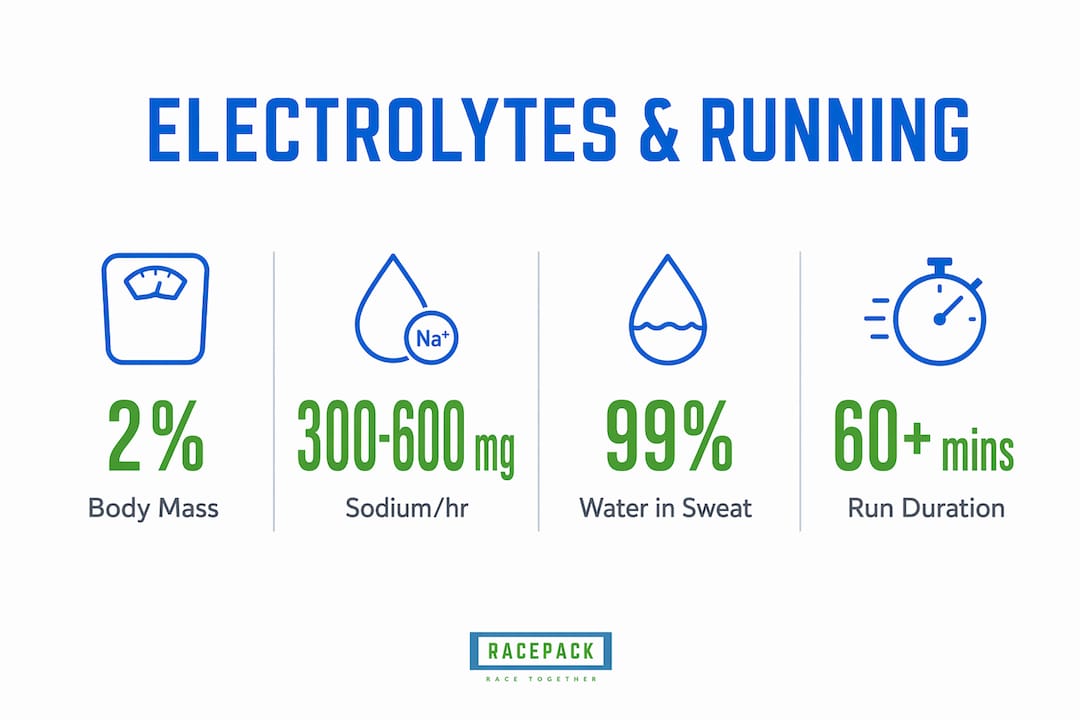
Sodium is the primary electrolyte lost in sweat. Sweat is 99% water, but that remaining 1% contains sodium and other minerals your body cannot easily replace on its own. This is why water alone is not enough during longer runs. Replacing fluid without replacing sodium dilutes your blood sodium concentration, which creates its own set of problems.
Dehydration exceeding 2% of body mass impairs cardiac output and thermoregulation, reducing endurance performance measurably. That threshold is easier to reach than most runners expect, especially in hot and humid conditions. A 70 kg runner loses that margin after shedding just 1.4 liters of sweat without adequate replacement.
How running depletes electrolytes through sweat
Running generates heat, and your body cools itself by sweating. The problem is that sweat carries more than water. Every liter of sweat contains a meaningful amount of sodium, along with smaller quantities of potassium, magnesium, and chloride. Sweat rates vary widely between runners and conditions, but the depletion pattern is consistent.
The consequences of electrolyte depletion include:
- Muscle cramps: Reduced sodium and potassium disrupt the electrical signals that control muscle contraction and relaxation.
- Fatigue: Electrolyte imbalance forces your cardiovascular system to work harder to maintain output.
- Headaches and light-headedness: Low blood sodium, known as hyponatremia, reduces pressure regulation in the brain.
- Impaired nerve signaling: Without adequate electrolytes, nerve impulses slow down, affecting coordination and reaction time.
- Reduced endurance: Sodium is critical to replace during runs longer than 60–90 minutes to prevent fatigue and performance decline.
Sweat rate also depends on your fitness level, body size, heat acclimatization, and the ambient temperature. A runner covering 20 km in Singapore’s midday heat loses electrolytes far faster than the same runner on a cool morning.
Pro Tip: Check your clothing and skin after a hard run. White, crusty residue on your shirt or face is dried sodium. Runners who see heavy salt stains consistently are heavy sodium losers and need a more aggressive replacement strategy.
What does the science say about electrolyte replacement and endurance?
The research on electrolyte supplementation is clear for runs beyond a certain duration. A 2026 meta-analysis found that carbohydrate-electrolyte solutions during exercise lasting over 60–90 minutes enhance performance by maintaining blood glucose and electrolyte balance. The evidence points to a 6% carbohydrate concentration as effective for endurance. That combination outperforms water alone and carbohydrates alone in sustained efforts.
“Carbohydrate-electrolyte supplementation preserves cardiovascular and thermoregulatory function during prolonged exercise, directly supporting time to exhaustion in endurance events. The benefit is most pronounced when exercise exceeds one hour in moderate to high heat.”
The table below summarizes when electrolyte supplementation produces measurable performance benefits:
| Run duration | Conditions | Electrolyte benefit |
|---|---|---|
| Under 60 minutes | Cool, low intensity | Minimal; water is sufficient |
| 60–90 minutes | Moderate heat or intensity | Moderate; sodium replacement helps |
| Over 90 minutes | Any conditions | Strong; CHO-E solutions recommended |
| Over 90 minutes | Hot and humid | Critical; aggressive sodium replacement needed |
Supplementation efficacy varies with exercise context, including duration, dosage, and environmental factors like heat and humidity. This means a one-size-fits-all approach does not work. A 45-minute easy jog in an air-conditioned gym does not require the same strategy as a 3-hour trail run in 32°C heat.
For runners interested in how these principles apply to high-intensity training, the demands on electrolyte balance increase further as effort levels rise.
Common myths about electrolytes and muscle cramps
The biggest myth in running nutrition is that muscle cramps are caused purely by electrolyte deficiency. Muscle cramps are multifactorial, and electrolyte intake alone does not prevent all cramps. Pacing errors, neuromuscular fatigue, and inadequate training load all contribute. Blaming every cramp on low sodium leads runners to over-supplement without fixing the real cause.
That said, electrolyte depletion does increase cramp risk, particularly during long runs in the heat. The nuance matters. Here is what actually drives your electrolyte needs:
- Run duration: Needs increase significantly beyond 60–90 minutes.
- Sweat rate: Heavy sweaters lose more sodium per hour than light sweaters.
- Heat and humidity: Hot conditions accelerate both fluid and electrolyte loss.
- Individual variation: Genetics influence how much sodium you lose per liter of sweat.
- Fitness and acclimatization: Well-trained runners who have adapted to heat lose less sodium per liter of sweat over time.
Potassium and magnesium play supporting roles in muscle and nerve function, but sodium remains the primary electrolyte to replace during runs. Many recreational runners can follow a “season to taste” approach, adding a little extra salt to meals on heavy training days rather than strict supplementation. This context-dependent strategy works well for runners who are not covering ultramarathon distances or training in extreme heat.
Pro Tip: If you only cramp in the final miles of long runs, the cause is more likely neuromuscular fatigue than electrolyte deficiency. Track your sodium intake and your pacing data together to find the real pattern.
How to time and dose electrolytes before, during, and after runs
Practical electrolyte management follows a simple framework based on run length and conditions. The goal is to stay ahead of depletion rather than catch up after the fact.
- Before your run: For runs under 60 minutes, a normal pre-run meal with adequate salt is sufficient. For longer efforts, consider a sodium-containing drink or light snack 30–60 minutes before starting.
- During runs of 60–90 minutes: Begin electrolyte intake early. Do not wait until you feel thirsty or fatigued. Sodium intake of 300–600 mg per hour helps prevent depletion and performance decline during endurance exercise.
- Combining electrolytes with carbohydrates: Carbohydrate-electrolyte drinks improve absorption of both nutrients simultaneously. A 6% carbohydrate solution with sodium is the evidence-backed standard for runs over 90 minutes.
- Salt tablets vs. sports drinks vs. whole foods: Salt tablets like SaltStick FastChews give precise sodium dosing. Sports drinks combine carbohydrates and electrolytes in one formula. Whole foods like bananas and salted pretzels work well for training runs but are harder to manage during races.
- After your run: Recovery electrolyte replenishment supports muscle repair and rehydration. A sodium-containing drink or meal within 30–60 minutes of finishing accelerates recovery.
- Monitoring your sweat loss: Weigh yourself before and after a long run. Each kilogram of body weight lost equals approximately one liter of fluid. Use that data to calibrate your intake on future runs.
Pro Tip: Never test a new electrolyte product on race day. Practice your hydration strategy during training runs that match your race conditions in duration and intensity.
Electrolyte drinks also improve palatability and stimulate thirst, which helps runners drink more consistently during long sessions. Taste matters more than most runners realize. If a drink tastes good, you drink more of it. That simple fact reduces dehydration risk meaningfully over a 3-hour run.
For runners who want to understand how sodium specifically affects marathon performance, RacepackSingapore’s guide on sodium during marathon running covers the topic in depth.
Key Takeaways
Electrolytes are the foundation of running hydration: sodium replacement during runs over 60 minutes directly prevents fatigue, cramping, and performance decline.
| Point | Details |
|---|---|
| Sodium is the priority electrolyte | Replace 300–600 mg of sodium per hour during runs longer than 60–90 minutes. |
| Dehydration threshold is low | Losing just 2% of body mass through sweat measurably impairs endurance and cardiac output. |
| CHO-E solutions outperform water | Carbohydrate-electrolyte drinks at 6% carbohydrate concentration improve time to exhaustion in prolonged efforts. |
| Cramps are not always electrolyte-related | Pacing errors and neuromuscular fatigue also cause cramps; track both variables before adjusting sodium intake. |
| Personalize your strategy | Sweat rate, heat, and run duration all determine your actual electrolyte needs. |
What I’ve learned from years of watching runners get hydration wrong
Most runners I’ve worked with make the same mistake: they treat hydration as an afterthought and electrolytes as optional. They drink water when thirsty, skip sodium entirely, and then wonder why they fall apart at kilometer 30. The science is clear, but the application requires honesty about your own body.
The runners who perform best in heat are not the ones with the most expensive gear. They are the ones who have done the boring work of testing their sweat rate, tracking their sodium intake, and adjusting based on real feedback from their body. A Garmin watch tells you your pace and heart rate. Your salt stains and post-run weight tell you whether your hydration plan is working.
I have seen runners follow rigid supplementation protocols that were designed for elite ultramarathoners and apply them to a 10 km fun run. That is unnecessary and sometimes counterproductive. Electrolyte needs scale with duration, intensity, and environment. A recreational runner doing a 45-minute morning run in mild weather does not need a sodium loading protocol.
What actually works is building a personal baseline during training. Run your target race distance in similar conditions. Weigh yourself before and after. Note your salt stains. Adjust your sodium intake by 100 mg increments until your energy and comfort improve. That process takes three to four training cycles, but it produces a strategy that is genuinely yours.
— Jason John
Electrolyte and energy products for runners at RacepackSingapore
RacepackSingapore stocks a full range of electrolyte and carbohydrate products tested by endurance athletes across Singapore’s heat and humidity.
For runners who want a proven carbohydrate-electrolyte gel, GU Energy Gels deliver both fast carbohydrates and key electrolytes in a format built for racing. For hydration-focused runners, the HIGH5 ZERO+ Ultra Electrolytes sachets provide sodium, potassium, and magnesium without added sugar, making them ideal for mixing into your water bottle before and during runs. All products ship with next-day delivery within Singapore and come with guaranteed authenticity. Buy now and build your race-day hydration kit today.
FAQ
Why do electrolytes matter for running?
Electrolytes maintain fluid balance, nerve signaling, and muscle contractions during running. Without adequate sodium and potassium, performance declines and cramping risk increases, especially on runs longer than 60 minutes.
How much sodium do runners need per hour?
Research supports 300–600 mg of sodium per hour during endurance runs over 90 minutes. Heavy sweaters or runners in hot conditions may need the higher end of that range.
Do electrolytes prevent muscle cramps?
Electrolytes reduce cramp risk caused by sodium depletion, but cramps are multifactorial. Pacing errors and neuromuscular fatigue also cause cramps, so electrolyte intake alone does not guarantee cramp prevention.
When should I start taking electrolytes during a run?
Start electrolyte intake within the first 20–30 minutes of any run lasting over 60 minutes. Waiting until you feel thirsty or fatigued means you are already behind on replacement.
Are sports drinks better than water for running?
For runs under 60 minutes in cool conditions, water is sufficient. For runs over 60–90 minutes or in heat, carbohydrate-electrolyte drinks outperform water by maintaining blood glucose and sodium levels simultaneously.
What are the signs of electrolyte depletion during a run?
Signs include muscle cramps, unusual fatigue, headaches, light-headedness, and a noticeable drop in pace. White salt stains on your clothing after a run also indicate significant sodium loss.
Can I get enough electrolytes from food alone?
Whole foods like bananas, salted pretzels, and dairy provide electrolytes, but they are difficult to consume and absorb at race pace. Purpose-formulated sports drinks and gels deliver electrolytes faster and more reliably during intense efforts.
What is the best electrolyte product for runners in Singapore?
RacepackSingapore carries GU Hydration Tabs, SiS Hydro Electrolyte Powder, and HIGH5 Zero Electrolyte Drinks, all formulated for endurance athletes and suited to Singapore’s heat and humidity.
Does dehydration affect running performance significantly?
Yes. Losing just 2% of body mass through sweat impairs cardiac output and thermoregulation, producing a measurable drop in endurance performance. That threshold is reachable within an hour of running in warm conditions.
How do I know if I am a heavy sweater?
Weigh yourself before and after a one-hour run without drinking. Each kilogram lost equals approximately one liter of sweat. White salt residue on your skin or clothing after runs is a reliable visual indicator of high sodium loss.