

The Role of Sodium During Marathon Running
TL;DR:
- Sodium is essential for maintaining fluid balance, muscle contractions, and nerve signals during marathons. Proper, individualized sodium intake prevents hyponatremia, enhances hydration, and improves race performance through consistent dosing during training. Over- or under-supplementation pose risks, making personalized strategies based on sweat testing and practice critical for safety and success.
Sodium is the primary electrolyte lost through sweat during a marathon, and replacing it is what keeps your fluid balance, muscle contractions, and nerve signals functioning under race conditions. Known clinically as the key driver of plasma osmolality, sodium controls how much water your body retains and how effectively your cells absorb fluids. Lose too much and your performance drops sharply. Drink too much plain water without replacing it and you risk hyponatremia, a dangerous dilution of blood sodium. Understanding sodium’s role is not optional for serious marathon runners. It is the foundation of any effective hydration plan.
What is the role of sodium during marathon running?
Sodium does three things your body cannot compensate for during a race: it regulates fluid balance, drives thirst signals, and enables electrical activity in muscles and nerves. When sodium levels fall, your muscles fatigue faster and your ability to regulate body temperature weakens, particularly in runs lasting longer than four hours. That is not a minor inconvenience. It is a direct threat to finishing time and safety.

Sodium also plays a mechanical role in hydration. It stimulates thirst, reduces urine output, and aids water and glucose absorption in the small intestine. This means sodium does not just replace what you lose. It actively improves how well your body uses the fluids you consume. Without adequate sodium, drinking more water can actually make things worse.
The clinical term for dangerously low blood sodium is hyponatremia. In 2002, approximately 1,900 of 15,000 Boston Marathon finishers developed hyponatremia, almost entirely due to excessive plain water intake without sodium replacement. That single data point reshaped how sports medicine professionals approach marathon hydration.
How much sodium do marathon runners lose per hour?
Sodium loss through sweat varies more than most runners expect. Heavy or “salty” sweaters can lose 700 to 1,200mg of sodium per hour. Average runners lose 400 to 700mg per hour. Low-salt sweaters may lose as little as 200 to 400mg per hour. That is a sixfold difference between the lowest and highest end, which makes a single universal recommendation impossible.
| Sweat Type | Sodium Loss Per Hour | Replacement Starting Point |
|---|---|---|
| Low-salt sweater | 200–400mg | 150–300mg |
| Average sweater | 400–700mg | 300–500mg |
| Heavy/salty sweater | 700–1,200mg | 500–900mg |
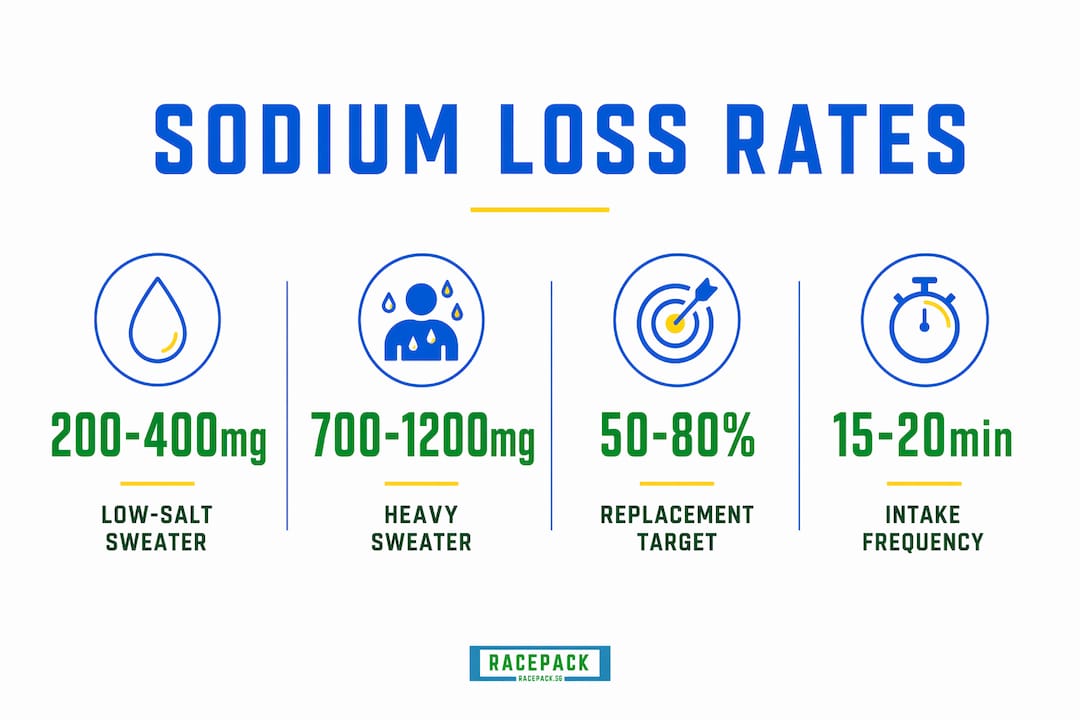
Replacement guidelines suggest targeting 50 to 80% of sweat sodium losses rather than a full 100%. Trying to replace every milligram is unnecessary and can overload your gut. The goal is to maintain plasma sodium concentration within a functional range, not to achieve perfect balance.
Pro Tip: Look at your skin and clothing after a long run. White, crusty residue is dried salt. Heavy deposits on your face or jersey are a reliable field indicator that you are a salty sweater and need a higher sodium replacement strategy.
What are the most effective sodium replacement strategies?
For most marathon runners, 300 to 700mg of sodium per hour is a practical starting range. In hot conditions or for salty sweaters, 700 to 1,000mg per hour can be justified, provided you have practiced this in training. The format you use matters less than the consistency of intake.
Effective sodium replacement formats include:
- Electrolyte capsules like SaltStick Electrolyte Caps, which deliver a measured sodium dose without added sugar
- Electrolyte drink mixes such as LMNT Electrolyte Drink Mix, which combine sodium with fluid for dual replenishment
- Energy gels with sodium, including GU Energy Gel, which pair carbohydrates with electrolytes for combined fueling
- Salty whole foods at aid stations, such as pretzels or broth, which work well for longer events
Timing matters as much as quantity. Taking sodium every 15 to 20 minutes with fluids produces better absorption than large, infrequent doses. Spacing intake also prevents the gastrointestinal distress that comes from flooding your system with a concentrated sodium hit. Cramping during marathons is multifactorial. Neuromuscular fatigue and pacing contribute as much as electrolyte status, so sodium alone is not a guaranteed cramp fix. Treat it as one part of a complete race nutrition plan.
Pro Tip: Never introduce a new sodium product on race day. Practice your exact supplementation plan during long training runs of 20 miles or more to confirm your gut tolerates the dose and timing.
How to personalize your sodium intake for race day
Personalizing sodium intake starts with understanding your own sweat profile. The body regulates sodium efficiently via hormones, so supplementation needs are highest for salty sweaters and in hot or humid conditions. For cooler races with moderate sweat rates, lower doses often suffice.
Follow this process to build your personal sodium plan:
- Assess your sweat type. Use the salt crystal test after a long run. Heavy residue means higher sodium loss.
- Start with a baseline dose. Begin at 300 to 400mg per hour in training and note how you feel at miles 15 to 20.
- Adjust for conditions. Add 200 to 300mg per hour for races in heat above 28°C or high humidity.
- Track symptoms. Muscle weakness, bloating, or nausea mid-run signals a mismatch between sodium and fluid intake.
- Refine over multiple long runs. Trial dosing during training is the most reliable method to confirm your optimal range.
Comparing two common runner profiles shows how different the needs can be:
| Runner Profile | Conditions | Suggested Sodium Range |
|---|---|---|
| Light sweater, cool race | Under 20°C, low humidity | 200–400mg/hr |
| Heavy sweater, hot race | Over 28°C, high humidity | 700–1,000mg/hr |
Pre-race sodium loading the day before a marathon does not prevent hyponatremia or cramping. Sweat testing remains the most accurate method for guiding race hydration planning. Sodium strategy is built in training, not the night before.
What are the symptoms and risks of sodium imbalance?
Hyponatremia and hypernatremia sit at opposite ends of the sodium spectrum, and both carry real risks during a marathon. Knowing the warning signs lets you correct course before symptoms become dangerous.
Signs of hyponatremia (too little sodium) include:
- Nausea and vomiting
- Swelling in the hands or feet
- Confusion or disorientation
- Severe fatigue disproportionate to effort
- Headache that worsens with fluid intake
Signs of hypernatremia (too much sodium) include:
- Extreme thirst and dry mouth
- Headache and irritability
- Muscle weakness or twitching
Hypernatremia occurs when blood sodium exceeds 145 mmol/L, typically from over-aggressive supplementation combined with inadequate fluid intake. It is less common than hyponatremia in marathon settings but still possible for runners who take high-dose salt capsules without drinking enough.
Steady sodium intake throughout a race prevents panic dosing that can worsen gastrointestinal distress and electrolyte imbalance. Typical race plans involve modest sodium dosing every 20 to 30 minutes, not reactive large doses when symptoms appear.
The safest approach is a pre-planned, practiced schedule. If you feel off mid-race, reduce pace and assess whether you have been drinking too much plain water or skipping sodium doses. Reactive sodium loading rarely solves the problem and often creates a new one.
Key takeaways
Sodium is the single most important electrolyte for marathon hydration, and getting your dose right requires individual testing, consistent timing, and adjustment for race conditions.
| Point | Details |
|---|---|
| Sodium drives hydration | It stimulates thirst, reduces urine output, and improves fluid absorption in the gut. |
| Loss varies widely | Runners lose 200 to 1,200mg of sodium per hour depending on sweat rate and conditions. |
| Dose consistently | Take 300 to 700mg per hour every 15 to 20 minutes rather than large infrequent doses. |
| Personalize through training | Trial dosing on long runs is the only reliable way to find your optimal sodium range. |
| Both extremes carry risk | Hyponatremia from plain water overconsumption and hypernatremia from over-supplementation are both preventable. |
What I have learned from getting sodium wrong first
I spent two marathons convinced that cramping was a training problem. I stretched more, ran more miles, and ignored my hydration plan entirely. It was not until a 32-kilometer training run in Singapore’s heat, when my legs locked up at kilometer 28 despite feeling well-fueled, that I started paying attention to sodium.
What changed everything was treating sodium supplementation as a skill, not a supplement. I started using SaltStick capsules on every long run over 90 minutes and logging how I felt at each 5km mark. Within three training cycles, I had a clear picture of my sweat profile and a dose that worked consistently. The cramping stopped. More importantly, my energy in the final 10km of races improved noticeably because I was no longer fighting a slow-building electrolyte deficit.
The mistake most runners make is treating sodium as a cramp remedy rather than a performance input. You take it when something goes wrong instead of building it into your plan from the start. Optimal sodium dosage is dynamic. It must account for individual sweat and race conditions rather than a fixed number you read in an article. Start low, test consistently, and adjust based on real data from your own body.
— Jason John
Stock your sodium plan with the right products
RacepackSG carries the electrolyte products that serious marathon runners in Singapore rely on for race day hydration support.
SaltStick Electrolyte Caps deliver a buffered, measured sodium dose in capsule form, making them easy to carry and dose precisely during a race. For runners who prefer a drink-based approach, the LMNT Electrolyte Drink Mix combines sodium with potassium and magnesium in a format designed for endurance hydration. If you want combined carbohydrate and sodium fueling, GU Energy Gels provide both in a single packet. All products are authentic and available with next-day delivery across Singapore. Build your sodium plan in training, and we will make sure you have the right tools to execute it.
FAQ
What is the role of sodium during a marathon?
Sodium is the primary electrolyte that maintains fluid balance, supports muscle contractions, and enables nerve signals during a marathon. Replacing it steadily throughout the race prevents both dehydration and hyponatremia.
How much sodium should I take per hour during a marathon?
Most runners perform well with 300 to 700mg of sodium per hour, taken every 15 to 20 minutes with fluids. Salty sweaters or runners in hot conditions may need up to 1,000mg per hour.
What causes hyponatremia during a marathon?
Hyponatremia is caused by drinking excessive plain water without replacing sodium, which dilutes blood sodium concentration. In 2002, approximately 1,900 Boston Marathon finishers developed the condition due to fluid overconsumption.
Can too much sodium cause problems during a race?
Yes. Blood sodium above 145 mmol/L causes hypernatremia, with symptoms including extreme thirst, headache, and irritability. Panic dosing large amounts of salt mid-race without adequate fluid intake is the most common trigger.
Should I sodium-load before a marathon?
Pre-race sodium loading is not effective for preventing cramps or hyponatremia. Sweat testing and practicing your sodium strategy during long training runs produces far more reliable results on race day.