

Fuel During Training Runs: Your 2026 Endurance Guide
TL;DR:
- Fueling during training runs involves consuming carbohydrates, fluids, and electrolytes at specific times to maintain energy and hydration. Athletes must personalize their fueling strategies based on run duration, with higher carbohydrate intake needed after 90 minutes to prevent glycogen depletion. Proper hydration, gut training, and post-run nutrition are essential for optimal performance and recovery.
Fueling during training runs is the practice of consuming carbohydrates, fluids, and electrolytes in specific amounts and at precise timings to maintain energy and hydration throughout endurance exercise. The industry term for this practice is mid-run nutrition, and getting it right separates athletes who finish strong from those who hit the wall. Carbohydrate intake during runs longer than 90 minutes should start at 30–60g per hour, with competitive marathoners trialing up to 90g per hour. Fluid targets sit at 400–800ml per hour alongside 500–700mg of sodium per hour. RacepackSingapore stocks the full range of products you need to execute these numbers on every run.
How much fuel do you need during training runs?
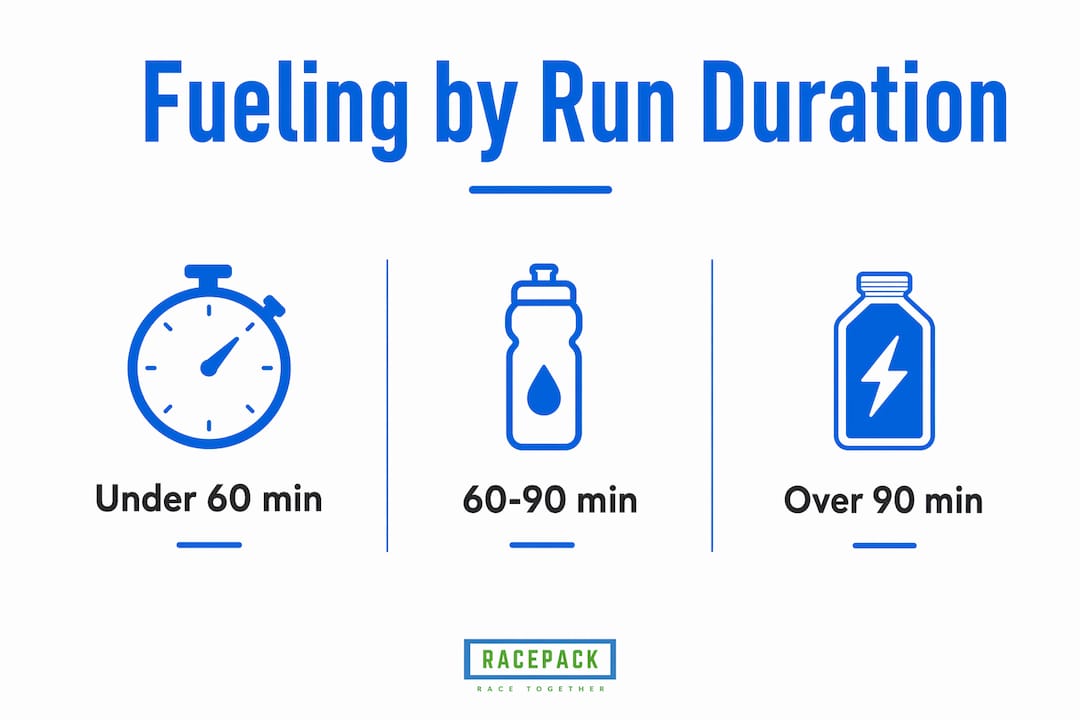
The answer depends entirely on run duration. Short runs under 60 minutes require little to no mid-run fuel for most athletes. Your stored glycogen covers the energy demand, and plain water is sufficient for hydration.
Runs between 60 and 90 minutes sit in a gray zone. You can get by on 0–30g of carbohydrates per hour, especially with a solid pre-run meal. A light electrolyte drink works better than plain water here, particularly in hot and humid conditions like Singapore.
Once you cross 90 minutes, the rules change. Glycogen depletion becomes a real threat, and your body cannot sustain pace without external carbohydrate input. The baseline target is 30–60g of carbohydrates per hour. Runners training for marathons with a well-adapted gut can push to 60–90g per hour for a measurable performance edge.
Fueling by run duration
| Run Duration | Carbohydrate Target | Fluid Target | Sodium Target |
|---|---|---|---|
| Under 60 min | 0g | 150–200ml as needed | Minimal |
| 60–90 min | 0–30g/hr | 400–600ml/hr | 300–500mg/hr |
| 90 min to 2.5 hrs | 30–60g/hr | 400–800ml/hr | 500–700mg/hr |
| 2.5 hrs and beyond | 60–90g/hr | 500–800ml/hr | 500–700mg/hr |
Timing matters as much as quantity. Start fueling 45–60 minutes into any run longer than 90 minutes. Waiting until you feel tired or thirsty means glycogen is already falling and performance is already declining.
Key hydration principles to follow:
- Sip 150–200ml every 15–20 minutes rather than drinking large volumes infrequently.
- Adjust fluid intake upward in heat, humidity, or high-intensity efforts.
- Never rely on thirst alone as your hydration signal during long runs.
- Match sodium intake to sweat rate. Heavy sweaters need the upper end of the 500–700mg/hr range.
What are the best fuel options for long runs?
Carbohydrate source matters, not just quantity. The most effective mid-run fuels use glucose, fructose, or maltodextrin-fructose blends. These combinations use separate intestinal transporters, which means your gut can absorb more carbohydrate per hour than glucose alone allows.
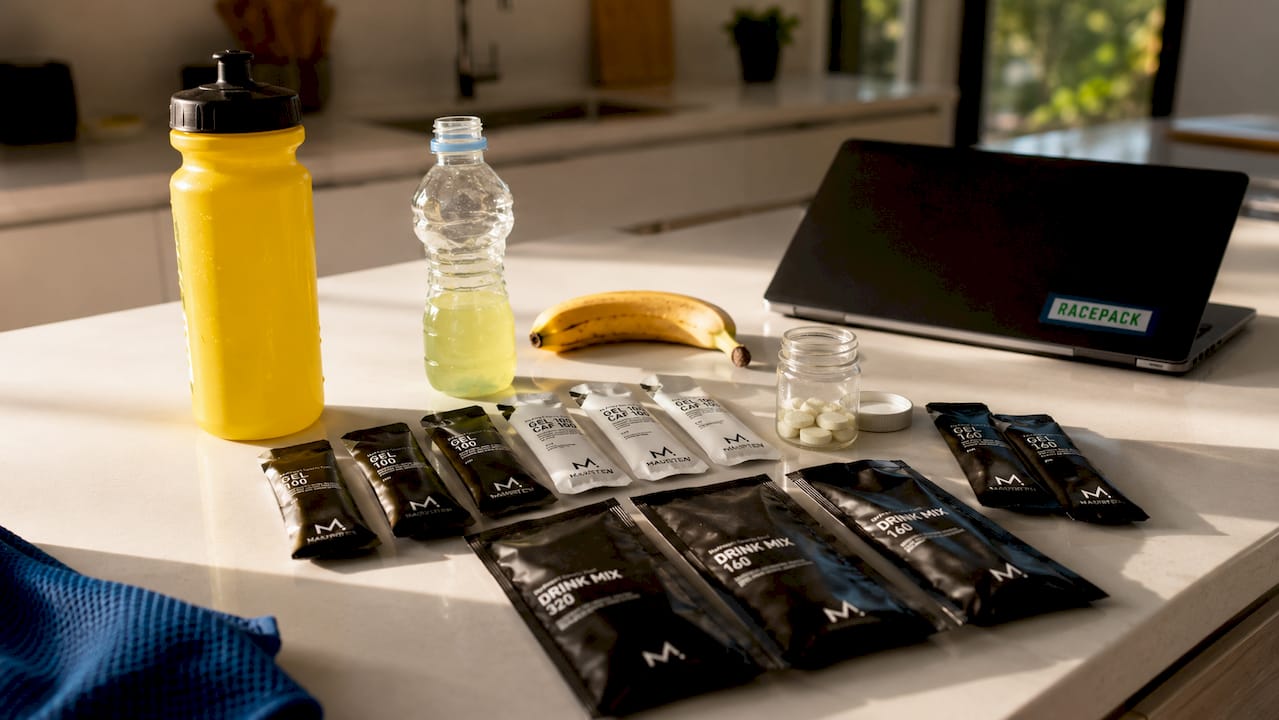
Glucose-fructose blends above 60–70g per hour improve running economy by roughly 3% compared to single-source carbohydrates. That gain requires gut training first. Jumping straight to high-dose blended fuels without adaptation causes gastrointestinal distress.
Common fuel types and their strengths
- Energy gels: Fast-absorbing, portable, and pre-measured. The SiS Beta Fuel Energy Gel uses a 1:0.8 maltodextrin-to-fructose ratio, which is designed for high-dose carbohydrate absorption with reduced gut stress.
- Hydration and fuel combined: Products like Tailwind Endurance Fuel deliver carbohydrates, sodium, and fluid in one drink, reducing the need to carry multiple products.
- Whole food options: Bananas, dates, and boiled potatoes work well for athletes who prefer lower-processed fuel on very long runs.
- Sports drinks: Useful for runs where both hydration and carbohydrate delivery are needed simultaneously.
Water alone is insufficient for runs exceeding 60–90 minutes. Drinking plain water without electrolytes dilutes blood sodium, which leads to cramping, nausea, and in severe cases, hyponatremia. An electrolyte drink or salt tablet alongside water prevents this.
Pre-run nutrition sets the foundation for mid-run performance. Low-fiber, low-fat, simple carbohydrates eaten 2–3 hours before your run minimize gastrointestinal distress during the session. Think white rice, toast with honey, or a banana with oats. Avoid high-fat or high-fiber meals before long efforts.
Pro Tip: Check the glycemic index of your pre-run carbohydrates. Moderate-GI foods 2–3 hours out provide steady energy without the blood sugar spike and crash that high-GI foods can cause.
How to build a personalized fueling and hydration strategy
Generic fueling formulas are a starting point, not a finish line. Mid-run fueling must be personalized based on sweat rate, exercise intensity, environmental conditions, and digestive tolerance. Your training runs are the laboratory where you collect that data.
Follow this step-by-step process to build your own fueling plan:
- Establish your baseline. Start with 30g of carbohydrates per hour on runs over 90 minutes. Use a single gel or half a serving of a combined fuel product. Record how your stomach and energy levels respond.
- Increase gradually. Add 10–15g of carbohydrates per hour each week. Progressive carbohydrate increases train your gut to absorb more without distress. Never jump from 30g to 60g in one session.
- Measure your sweat rate. Weigh yourself before and after a one-hour run without drinking. Every kilogram lost equals roughly one liter of sweat. Use this number to set your fluid targets.
- Lock in your pre-run meal. Choose one meal that works and repeat it before every long run. Consistent pre-run meals over weeks significantly reduce gastrointestinal symptoms by building digestive reliability.
- Test your race-day products in training. Never use a new gel, drink, or food source on race day. Every product in your race-day kit should have at least three training-run trials behind it.
- Adjust for conditions. Singapore’s heat and humidity increase sweat rate substantially. Add 100–200ml of fluid per hour and bump sodium intake toward the upper range on hot training days.
- Track your results. Log what you consumed, when you consumed it, and how you felt at each stage of the run. Patterns emerge quickly across four to six sessions.
Recognizing the signs of under-fueling is critical. Sudden fatigue, slowed pace, irritability, and difficulty concentrating mid-run all signal glycogen depletion. Overhydration signs include bloating, nausea, and a sloshing sensation in the stomach. Both are avoidable with a practiced plan.
Pro Tip: Use your longest weekly training run to test one new fueling variable at a time. Changing gel brand, fluid volume, and timing simultaneously makes it impossible to identify what caused any problem.
What to eat and drink after training runs for recovery
Post-run nutrition is where adaptation happens. Consuming the right nutrients within 30–60 minutes after finishing accelerates glycogen resynthesis and muscle repair, which directly improves the quality of your next session.
The targets are specific. Consume 1.0–1.2g of carbohydrates per kilogram of body weight and 0.3–0.4g of protein per kilogram within that 30–60 minute window. For a 70kg runner, that means roughly 70–84g of carbohydrates and 21–28g of protein.
Key recovery nutrition principles:
- Prioritize the carbohydrate-to-protein ratio. A 3:1 ratio of carbohydrates to protein is the standard for endurance recovery. It replenishes glycogen while giving muscles the amino acids needed for repair.
- Choose fast-absorbing carbohydrates. White rice, fruit, or a recovery drink work faster than slow-digesting whole grains immediately post-run.
- Add protein from quality sources. Whey protein absorbs quickly and delivers leucine, the amino acid most responsible for triggering muscle protein synthesis.
- Rehydrate with electrolytes. Plain water rehydrates volume but not sodium. An electrolyte drink or salty snack alongside your recovery meal restores the sodium lost in sweat.
Skipping the post-run recovery window does not just slow today’s recovery. It compounds across a training block, increasing injury risk and reducing the quality of every subsequent session. Treat the 30–60 minute window as part of the workout itself.
Key Takeaways
Effective fuel during training runs requires matching carbohydrate intake, fluid volume, and sodium replacement to run duration, intensity, and individual sweat rate.
| Point | Details |
|---|---|
| Start fueling at 45–60 minutes | Begin carbohydrate intake before glycogen drops, not after fatigue sets in. |
| Use 30–60g carbs per hour | This baseline covers runs of 90 minutes or more; advanced runners can trial up to 90g/hr. |
| Electrolytes beat plain water | Runs over 60–90 minutes require sodium alongside fluid to prevent cramping and dilution. |
| Gut-train progressively | Increase carbohydrate intake by 10–15g per hour each week to build absorption tolerance. |
| Recovery window is 30–60 minutes | Consume 1.0–1.2g/kg carbohydrates and 0.3–0.4g/kg protein immediately post-run. |
Why I stopped copying other runners’ fueling plans
The biggest mistake I see endurance athletes make is borrowing someone else’s fueling strategy wholesale. A training partner swears by two gels per hour and a specific electrolyte drink, so you copy the exact protocol. It works for them. It wrecks your stomach.
What I have learned from years of working with endurance athletes is that sweat rate variation alone makes generic plans unreliable. Two runners of identical weight, running the same pace in the same conditions, can have sweat rates that differ by a factor of two. The runner who sweats more needs dramatically more sodium and fluid. The same gel dose that fuels one athlete perfectly leaves another bonking at kilometer 25.
The athletes who perform most consistently are the ones who treat every long training run as a data collection session. They log their fuel intake, note their energy levels at each kilometer, and track their body weight before and after to calculate fluid loss. After six to eight weeks of this, they have a personalized fueling profile that no generic guide can replicate.
One more thing I want to address: the fear of eating during runs. Many runners, especially those newer to endurance training, feel that consuming food mid-run is a sign of weakness or poor fitness. That belief costs performance. Even elite marathoners fuel aggressively. The role of sodium and carbohydrates during sustained effort is physiological, not optional. Fueling is a skill, and like any skill, it gets better with deliberate practice.
— Jason John
RacepackSingapore has your training nutrition covered
Building a fueling plan is only half the work. Having the right products on hand makes execution consistent and reliable.
RacepackSingapore carries the full range of mid-run and recovery nutrition from brands trusted by endurance athletes worldwide. The Maurten Full Marathon Starter Kit gives you a complete glucose-fructose carbohydrate system built for long efforts. The SiS Beta Fuel Energy Gel delivers a high-dose carbohydrate blend in a single portable serving. For combined hydration and fuel in one product, Tailwind Endurance Fuel covers both needs simultaneously. All products ship with next-day delivery across Singapore and come with guaranteed authenticity. Buy now and start training with the right fuel in your kit.
FAQ
What is the recommended carbohydrate intake during a long run?
Runners should consume 30–60g of carbohydrates per hour starting 45–60 minutes into runs longer than 90 minutes. Competitive marathoners with gut-trained digestion can trial up to 90g per hour using glucose-fructose blends.
When should I start fueling during a training run?
Start fueling 45–60 minutes into any run that will exceed 90 minutes total. Beginning earlier is unnecessary for most athletes; waiting until fatigue sets in means glycogen is already depleted.
Is plain water enough for long runs?
Plain water is insufficient for runs exceeding 60–90 minutes. Drinking water without electrolytes dilutes blood sodium, which causes cramping, nausea, and reduced performance. Use an electrolyte drink or add a sodium source alongside water.
How do I avoid stomach problems when fueling during runs?
Increase carbohydrate intake gradually over several weeks to train your gut. Stick to low-fiber, low-fat foods 2–3 hours before running, and test every product in training before using it on race day.
What should I eat immediately after a training run?
Consume 1.0–1.2g of carbohydrates per kilogram of body weight and 0.3–0.4g of protein per kilogram within 30–60 minutes of finishing. This combination restores glycogen and triggers muscle repair for faster recovery.
How much sodium do I need during a long run?
The target is 500–700mg of sodium per hour during runs of 90 minutes or more. Heavy sweaters and athletes running in hot, humid conditions should aim for the upper end of that range.
What is gut training and why does it matter for runners?
Gut training is the process of progressively increasing carbohydrate intake during training runs week over week to improve intestinal absorption capacity. Without it, high-dose carbohydrate strategies cause gastrointestinal distress on race day.
How do I calculate my sweat rate for hydration planning?
Weigh yourself before and after a one-hour run without drinking any fluids. Each kilogram of body weight lost equals approximately one liter of sweat. Use this figure to set your hourly fluid replacement target.
What is the best pre-run meal for a long training run?
Choose low-fiber, low-fat, simple carbohydrates eaten 2–3 hours before your run. White rice, toast with honey, or oats with a banana are reliable options that minimize gastrointestinal distress during the session.
Do I need to fuel differently for marathon training versus shorter races?
Yes. Marathon training runs regularly exceed 90 minutes and require structured mid-run carbohydrate and electrolyte intake. Shorter race training sessions under 60 minutes generally need no mid-run fuel beyond water. Learn more about carb loading for marathons to complement your training nutrition plan.