

Why Pre Workout Nutrition Matters for Peak Performance
TL;DR:
- Proper pre-workout nutrition boosts performance by increasing workout capacity, protecting muscles, and supporting focus. Carbohydrates, protein, and hydration are essential, with timing varying based on session type and recovery status. Effective fueling requires personalized plans, avoiding common mistakes, and using proven supplements for optimal results.
Pre-workout nutrition is defined as the strategic intake of nutrients before exercise to sustain energy, protect muscle tissue, and sharpen focus during training. The Academy of Nutrition and Dietetics and the American College of Sports Medicine both recognize pre-exercise fueling as a foundational pillar of athletic performance. Whether you train for endurance, strength, or competitive sport, what you eat before a session directly shapes what your body can deliver. Understanding why pre workout nutrition matters is the first step toward training smarter and recovering faster.
Why pre workout nutrition matters for exercise performance
Carbohydrates are the primary driver of workout capacity. Consuming carbohydrates before training improves overall workout capacity by 12–15% compared to fasted training by maintaining muscle glycogen. That gap represents real reps, real kilometers, and real competitive advantage.
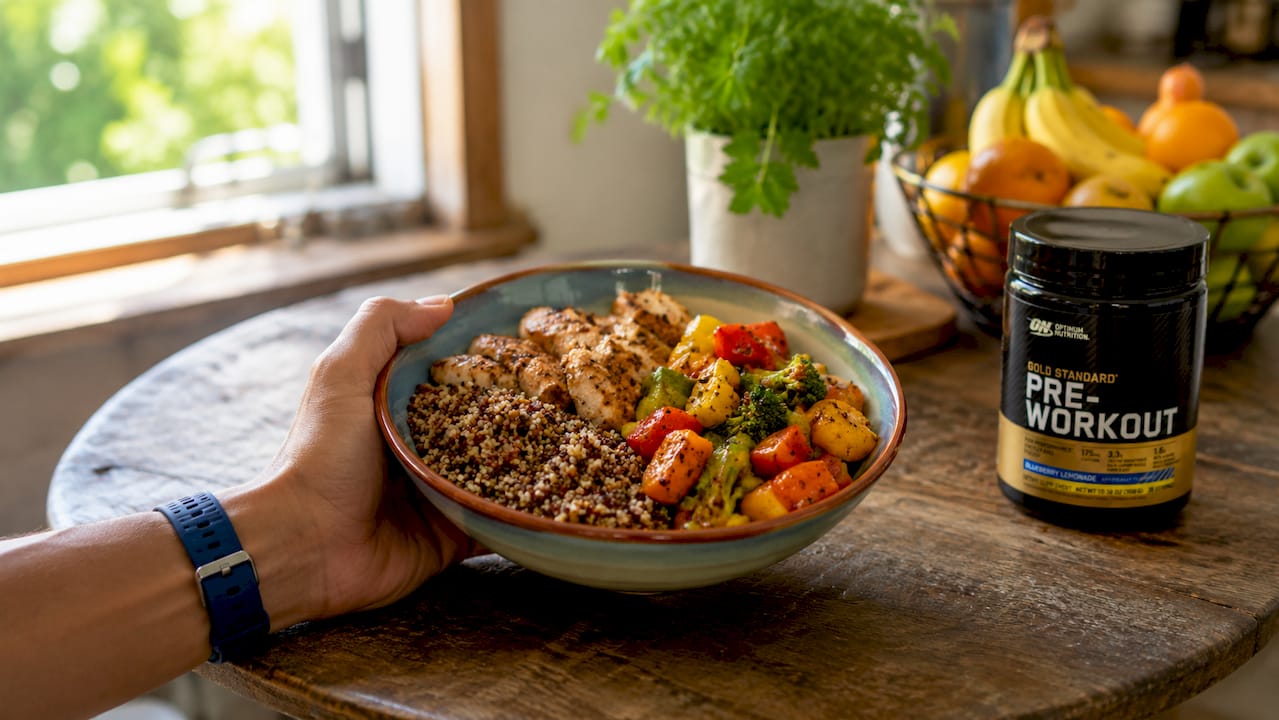
Protein plays an equally critical role before exercise. Pre-workout protein reduces muscle breakdown during training and primes recovery before you even finish your session. Most athletes focus on post-workout protein, but the preventive role of pre-exercise protein is just as significant for preserving lean muscle.
Hydration is the third pillar. Athletes should drink 16–20 ounces of water at least one hour before workouts to maintain baseline hydration and support performance. Even mild dehydration reduces strength output and mental sharpness.
The impact of nutrition on workouts also varies by training type:
- Endurance sessions (running, cycling, triathlon): Glycogen depletion is the primary limiter. Carbohydrate loading before long sessions is non-negotiable.
- Strength training: Protein and moderate carbohydrates support both power output and muscle preservation.
- High-intensity interval training: Fast-digesting carbohydrates deliver rapid fuel for repeated sprint efforts.
- Low-intensity or short sessions: Nutritional demands are lower, and some athletes tolerate these sessions with minimal pre-workout food.
Matching your fuel to your session type is the single most effective way to get more from every training hour.
What are the best foods to eat before a workout?
The best pre-workout meal balances carbohydrates, protein, and minimal fat and fiber. For moderate to high-intensity training lasting over 45 minutes, athletes should consume 0.5–1 gram of carbohydrates per kilogram of bodyweight before exercise. A 70 kg athlete, for example, targets 35–70 grams of carbohydrates in the pre-workout window.
Reducing fat and fiber close to training helps prevent gastrointestinal distress for most athletes. Fat and fiber slow gastric emptying, which means nutrients reach your bloodstream more slowly and your gut works harder during exercise. That combination is a recipe for discomfort mid-session.
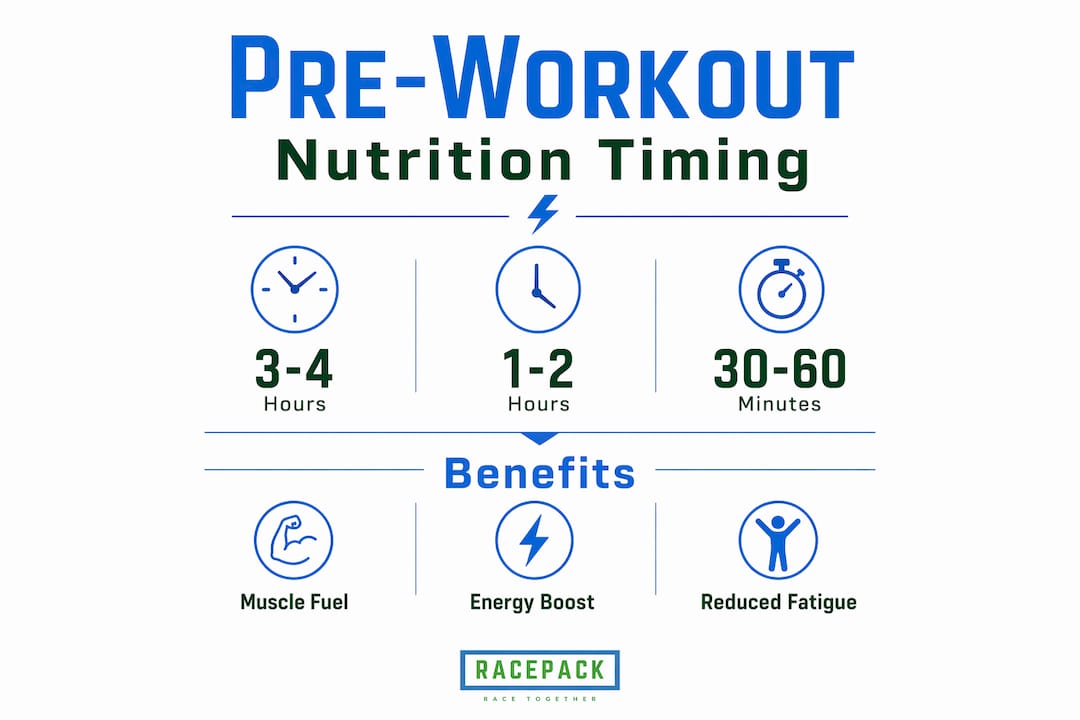
| Timing before training | Recommended meal type | Example foods |
|---|---|---|
| 3–4 hours | Full balanced meal | Rice, chicken, steamed vegetables |
| 1–2 hours | Moderate snack | Oats with banana, toast with eggs |
| 30–60 minutes | Light, fast-digesting snack | Energy gel, banana, white rice cake |
| Under 30 minutes | Minimal solid food | Sports drink, energy gel |
Pro Tip: If you train early in the morning and cannot eat a full meal, a small carbohydrate snack like a banana or an energy gel 20–30 minutes before your session is far better than training completely fasted for high-intensity work.
Caffeine is also a well-researched performance aid. Consuming 3–6 mg per kg of bodyweight of caffeine 30–60 minutes before exercise reliably improves performance across endurance, strength, and high-intensity workouts. That translates to roughly 200–400 mg for most athletes, which is the amount found in quality pre-workout formulas. The Optimum Nutrition Gold Standard Pre-Workout delivers a calibrated caffeine dose alongside beta-alanine and creatine to support this exact window.
How does timing shape your pre-workout nutrition needs?
Nutritional timing for exercise is not a fixed formula. There is no single “magic” window for pre-workout eating. Four variables govern what and when you should eat: session type, time before training, time of day, and current recovery status.
Morning fasted workouts present a specific challenge. Overnight, liver glycogen drops significantly to fuel your brain and organs during sleep. Athletes heading into a high-intensity morning session with no fuel are starting at a deficit. A small, fast-digesting carbohydrate source before the session closes that gap without requiring a full meal.
Later-day sessions benefit from the meals you have already eaten. If you have consumed balanced meals throughout the day, your glycogen stores are likely adequate for a moderate session. Your pre-workout snack then becomes a top-up rather than a primary fuel source.
Recovery status also changes the equation:
- Well-recovered athletes with full glycogen stores need less pre-workout carbohydrate for shorter sessions.
- Athletes in back-to-back training days need more aggressive pre-workout carbohydrate intake to compensate for incomplete glycogen restoration.
- Athletes returning from illness or rest may have depleted stores and should treat pre-workout fueling as a priority.
Carbohydrate-rich meals 1–4 hours before training improve endurance performance, especially in sessions longer than one hour. That window gives your body time to digest and deliver fuel without causing discomfort. For a practical breakdown of how to structure this timing across different training blocks, the sport nutrition timing guide from RacepackSingapore is a strong reference.
Pro Tip: Track how you feel at the 20-minute mark of your session. Consistent fatigue or mental fog at that point often signals insufficient pre-workout carbohydrate intake, not poor fitness.
Common mistakes athletes make with pre-workout nutrition
The most widespread mistake is treating pre-workout nutrition as a substitute for a solid daily diet. Pre-workout nutrition acts as a fuel top-up strategy and does not replace a balanced daily diet. Chronic under-fueling through poor daily eating cannot be fixed by a pre-workout snack alone. Your pre-workout meal only works well when the rest of your nutrition is already solid.
A second common error is fasted training at the wrong intensity. Fasted training is acceptable for low-intensity or short sessions, but it is not recommended for high-intensity or long-duration efforts. Athletes who push hard intervals or long runs without fuel risk accelerated muscle breakdown and reduced performance output.
Other frequent errors include:
- Eating too much fat or fiber within 90 minutes of training. Both slow digestion and increase the risk of cramping or nausea during exercise.
- Skipping hydration before training. Many athletes hydrate during a session but arrive already dehydrated from the previous day.
- Relying on the same pre-workout meal regardless of session type. A recovery jog and a race-pace interval session require very different fuel.
- Ignoring individual digestive tolerance. What works for your training partner may not work for you. Trial and error with timing and food types is part of building a personal fueling plan.
For athletes who want to understand how pre-workout choices connect to recovery, the recovery nutrition guide from RacepackSingapore shows how the two phases of nutrition reinforce each other.
How to personalize your pre-workout nutrition plan
Personalized pre-workout nutrition starts with honest assessment of your training demands. A recreational athlete doing three moderate sessions per week has different needs than a competitive runner logging 80 kilometers. Your pre-workout meal guidelines should reflect your actual session intensity, not a generic template.
Start by experimenting with timing. Some athletes perform well with a full meal two hours before training. Others need three hours to feel comfortable. Test different windows during lower-stakes training sessions before applying them to key workouts or races. For athletes who need rapid, portable fuel, the MyProtein HYROX Pre Workout Gel delivers fast-acting carbohydrates in a format designed for the 30-minute pre-session window.
Hydration is non-negotiable in any personalized plan. Drink consistently throughout the day, not just in the hour before training. Athletes who match their training type to their nutrition approach consistently report better energy and endurance across varied session formats.
Pro Tip: Keep a simple training log that notes what you ate, when you ate it, and how your energy felt during the session. After four weeks, patterns emerge that no generic guide can predict for you.
Key Takeaways
Pre-workout nutrition is the single most controllable variable between a strong training session and a flat one.
| Point | Details |
|---|---|
| Carbohydrates drive capacity | Eating carbs before training improves workout capacity by 12–15% versus fasted sessions. |
| Protein protects muscle | Pre-exercise protein reduces muscle breakdown and primes recovery before training ends. |
| Timing is flexible, not fixed | Session type, time of day, and recovery status all determine when and how much to eat. |
| Fat and fiber need space | Reduce both within 90 minutes of training to avoid digestive distress during exercise. |
| Daily diet is the foundation | Pre-workout snacks top up your fuel; they cannot compensate for a consistently poor diet. |
What I’ve learned from years of watching athletes fuel wrong
The most common thing I see is athletes who train hard and eat well in general, but completely neglect the pre-workout window. They show up to key sessions under-fueled and then blame their fitness when their performance falls short. The fuel was the problem, not the training.
What I have also noticed is that the athletes who perform most consistently are not the ones following the most complex nutrition protocols. They are the ones who have figured out their personal timing, their preferred foods, and their hydration rhythm through deliberate experimentation. They treat pre-workout nutrition as a skill, not an afterthought.
The nuance that most generic advice misses is the role of recovery status. An athlete coming off a rest day with full glycogen stores needs a very different pre-workout approach than the same athlete on day three of a training block. Applying the same meal to both situations is a mistake I see constantly. Pair your pre-workout strategy with a clear understanding of protein synthesis and recovery to get the full picture of how nutrition drives adaptation.
Pre-workout nutrition is not about perfection. It is about consistency and awareness. Get those two things right, and your training will reflect it.
— Jason John
Pre-workout nutrition products worth adding to your training
Athletes who understand the importance of pre-workout food know that whole foods alone do not always fit the timing window. RacepackSingapore carries a focused range of pre-workout products built for athletes who need clean energy, fast delivery, and proven formulas.

The Optimum Nutrition Gold Standard Pre-Workout is a go-to for athletes who want calibrated caffeine, creatine, and beta-alanine in a single serving. For race-day or high-intensity sessions, the MyProtein HYROX Pre Workout Gel delivers rapid carbohydrate energy in a portable format. Athletes focused on blood flow and muscle pump can add EVLution PumpMode as a stimulant-free nitric oxide booster. All products ship next-day within Singapore with guaranteed authenticity.
FAQ
What is pre-workout nutrition?
Pre-workout nutrition is the strategic intake of carbohydrates, protein, and fluids before exercise to sustain energy, reduce muscle breakdown, and support performance during training.
How long before a workout should I eat?
A full meal works best 2–4 hours before training. A light snack or energy gel is appropriate 30–60 minutes before a session, depending on digestive tolerance.
Does pre-workout nutrition improve performance?
Yes. Carbohydrate intake before training improves workout capacity by 12–15% compared to fasted training, with additional benefits from protein and hydration.
Is it okay to train fasted?
Fasted training is acceptable for low-intensity or short sessions but is not recommended for high-intensity or long-duration workouts where glycogen demand is high.
What should I eat 30 minutes before a workout?
A fast-digesting carbohydrate source works best at this window. Options include a banana, a rice cake, or a purpose-formulated energy gel like the MyProtein HYROX Pre Workout Gel.
How much carbohydrate do I need before training?
For sessions over 45 minutes at moderate to high intensity, target 0.5–1 gram of carbohydrates per kilogram of bodyweight before exercise.
Does caffeine help before a workout?
Yes. Research shows 3–6 mg per kg of caffeine taken 30–60 minutes before exercise improves performance across endurance, strength, and high-intensity training formats.
Can I replace my pre-workout meal with a supplement?
No. Pre-workout nutrition supports but does not replace a balanced daily diet. Supplements and gels are top-up tools, not substitutes for consistent daily fueling.
What foods should I avoid before training?
Avoid high-fat and high-fiber foods within 90 minutes of training. Both slow digestion and increase the risk of gastrointestinal discomfort during exercise.
How does hydration fit into pre-workout nutrition?
Drink 16–20 ounces of water at least one hour before training to maintain baseline hydration. Arriving dehydrated reduces both strength and mental performance from the first set.
Where can I buy pre-workout nutrition products in Singapore?
RacepackSingapore stocks a full range of pre-workout supplements, gels, and hydration products from brands including Optimum Nutrition and MyProtein, with next-day delivery across Singapore. Buy now and fuel your next session right.