

Marathon Training Plan for Beginners: Your First Race Guide
TL;DR:
- A beginner marathon training plan involves a structured, progressive schedule that gradually builds endurance over 16 to 20 weeks through periodized training and consistent effort. It emphasizes slow, conversational pacing, proper nutrition starting at miles 4 to 5, and respecting rest and taper periods to prevent injury and improve performance. Following these principles and practicing nutrition and pacing during training increases the chances of a successful race finish.
A marathon training plan for beginners is a structured, progressive schedule that builds a first-time runner’s endurance from a comfortable base to 26.2 miles over 16 to 20 weeks. The standard industry term for this approach is periodized endurance training, and it works by alternating stress and recovery in a deliberate sequence. Most beginners who follow a structured plan arrive at the start line healthy, confident, and ready to finish. Those who improvise rarely do.
Before you start, you need a realistic baseline. Beginners should run 3 to 4 miles without stopping and train 2 to 3 times per week before committing to a marathon plan. Without that foundation, the early weeks of training become injury territory rather than fitness building. If you are not there yet, a couch-to-5K program is the right first step.
What does a marathon training plan for beginners look like each week?
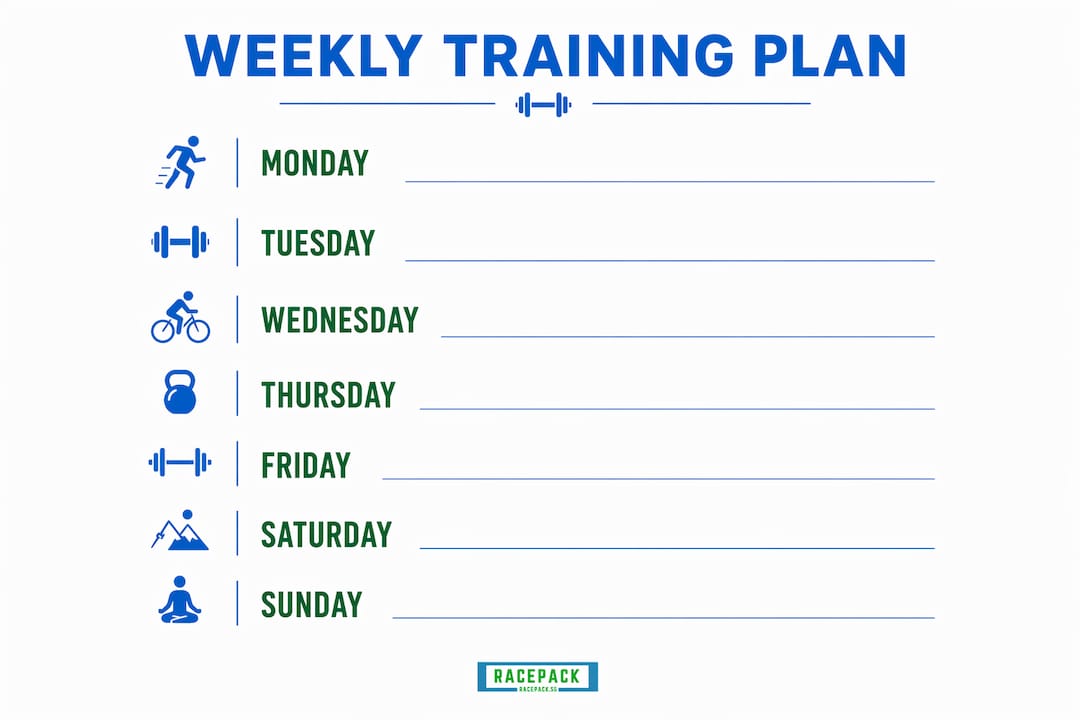
The weekly structure of a beginner marathon schedule is not complicated, but it must be consistent. One proven 18-week plan includes one long run, one quality session, one recovery run, one easy aerobic run, one strength day, and two full rest days every week. That rhythm gives your body enough stimulus to adapt and enough time to repair.
Here is what each run type does for you:
- Long run: The cornerstone of first marathon training. It builds the aerobic base and mental toughness you need for race day. Distance increases by roughly 10% per week.
- Easy runs: Two to three shorter runs at a relaxed, conversational pace. These accumulate mileage without taxing your system.
- Quality or tempo run: One session per week at a comfortably hard effort. This improves your lactate threshold and teaches your body to sustain pace.
- Recovery run: A short, very slow run that promotes blood flow and clears muscle soreness without adding fatigue.
- Strength session: Single-leg squats, hip bridges, and calf raises protect the knees, hips, and ankles that take the most punishment in distance running.
| Training day | Session type | Purpose |
|---|---|---|
| Monday | Rest | Full recovery after weekend long run |
| Tuesday | Easy run (3-5 miles) | Aerobic base building |
| Wednesday | Strength or cross-training | Injury prevention and muscle balance |
| Thursday | Tempo or quality run | Speed and lactate threshold |
| Friday | Rest or recovery run | Active recovery |
| Saturday | Long run | Endurance and mental preparation |
| Sunday | Easy run (2-3 miles) | Flush fatigue, add light mileage |
Pro Tip: Never increase your weekly long run distance by more than 10% from one week to the next. This single rule prevents the majority of overuse injuries that sideline beginner runners.
How should beginners manage pacing and long runs?
Pacing is where most first-time marathon runners make their biggest mistake. Most training should happen at slower, easier paces than beginners expect. A runner targeting a 4:30 finish runs at roughly 6:24 per kilometer on race day, but the majority of training runs should be slower than that. Running too fast on easy days is the fastest route to burnout and injury.

The simplest pacing rule for beginners is the talk test. If you cannot hold a full conversation while running, you are going too fast. Easy runs should stay at a genuinely conversational pace, and many beginners are surprised by how slow that actually feels. Slowing down on easy days makes your long runs and quality sessions more productive.
For setting a realistic marathon goal pace, use your long run pace as an anchor. Your marathon target pace can be estimated by adding 15 to 20 seconds per kilometer to your comfortable long run pace. This gives you a sustainable race target that does not blow up in the final 10 kilometers.
Key pacing principles for your beginner running plan:
- Run easy days truly easy. Perceived effort should be a 5 out of 10.
- Save your energy for long runs and one quality session per week.
- Do not chase your GPS pace. Run by feel and effort.
- Accept that your long run pace will slow as distance increases. That is normal and correct.
Pro Tip: Leave your GPS watch on a simple time display for easy runs. Watching pace data tempts you to speed up. Running by feel builds better aerobic instincts over time.
What are the best nutrition and hydration strategies for marathon training?
Fueling is the part of marathon training most beginners ignore until race day. That is a costly error. Fueling should begin at miles 4 to 5 and continue consistently throughout the race. Waiting until you feel hungry or tired means your blood glucose has already dropped, and catching up is nearly impossible.
The carbohydrate target during marathon running is 60 to 90 grams per hour. For most runners, that means taking an energy gel every 30 to 45 minutes. One gel typically delivers 20 to 25 grams of carbohydrate, so you need two to three gels per hour to hit the upper end of that range. Brands like Maurten, GU, and SiS each offer gels in that range, and you can find a breakdown of gel options for runners to compare formats and flavors before committing.
The gut needs training just like your legs do. Practicing your race-day fueling plan during long runs for 6 to 8 weeks improves gut tolerance and reduces the risk of stomach problems on race day. Start with a lower carbohydrate intake and gradually work up to your target over several weeks. Never try a new gel brand or flavor for the first time on race day.
Hydration follows a similarly disciplined approach. Small sips every 15 to 20 minutes, alternating between electrolytes and water, prevents dehydration without overloading your stomach. Aim for 4 to 8 ounces per interval. Understanding sodium’s role in performance is especially relevant in Singapore’s heat, where sweat rates are higher and electrolyte loss happens faster.
| Fueling element | Target | Timing |
|---|---|---|
| Carbohydrates | 60 to 90 grams per hour | Start at mile 4 to 5, every 30 to 45 minutes |
| Hydration | 4 to 8 ounces per interval | Every 15 to 20 minutes |
| Electrolytes | Alternate with water | At every other aid station |
Pro Tip: Write your fueling plan on your wrist or arm before race day. When fatigue sets in after mile 18, you will not remember your schedule. A written plan removes the guesswork.
What mistakes do beginners most often make in marathon training?
The most common errors in first marathon training are predictable, and almost all of them are avoidable. Consistency and gradual progression outperform any single perfect workout. Here are the five mistakes that most often derail beginner runners:
- Starting the long run or race too fast. Going out too hard in the first 10 kilometers destroys the final 10. Discipline at the start is what makes the finish line possible.
- Skipping rest days and strength sessions. Rest is where adaptation happens. Skipping it does not make you fitter. It makes you injured. Strength work protects the joints that absorb 26.2 miles of impact.
- Trying new nutrition or gear on race day. New shoes, new gels, new socks. All of these have caused runners to drop out of marathons they were physically capable of finishing. Test everything in training.
- Chasing every workout. Some days you will feel slow. Running through fatigue to hit a pace target is how stress fractures and tendon injuries happen. Adjust and move on.
- Underestimating the taper period. Proper tapering in the final 3 weeks reduces volume while maintaining light efforts, improving race performance by about 2 to 3%. Many beginners panic during taper and add extra miles. That erases the benefit entirely.
Pro Tip: Mark your taper weeks on your calendar before training starts. When you feel the urge to run more during those weeks, look at the calendar. The plan is working. Trust it.
Key takeaways
A successful first marathon comes down to three non-negotiables: a structured weekly schedule, disciplined pacing, and a practiced fueling plan executed from mile 4 onward.
| Point | Details |
|---|---|
| Build your base first | You need to run 3 to 4 miles comfortably before starting a 16 to 20 week plan. |
| Run easy days slowly | Most training runs should be at a conversational pace to protect recovery and build aerobic fitness. |
| Fuel early and consistently | Start gels at mile 4 to 5, targeting 60 to 90 grams of carbohydrate per hour throughout the race. |
| Practice nutrition in training | Test your exact race-day fueling plan during long runs for 6 to 8 weeks to train your gut. |
| Respect the taper | Reducing volume in the final 3 weeks improves race performance by 2 to 3%. Do not add extra miles. |
What I have learned from watching beginners train for their first marathon
The runners who finish their first marathon well are almost never the ones who trained the hardest. They are the ones who trained the most consistently. I have seen athletes with impressive fitness fall apart at kilometer 35 because they skipped their nutrition practice. I have seen slower runners cross the line strong because they trusted the process every single week.
The taper period is where I see the most anxiety. Runners feel sluggish and anxious when training volume drops in those final weeks, and the instinct is to run more. That instinct is wrong. The fatigue you feel during taper is your body consolidating weeks of adaptation. Running through it wastes the gains you worked months to build.
My honest advice: slow down more than you think you need to on easy days, fuel earlier than feels necessary, and do not skip a single strength session. The marathon does not reward bravado. It rewards preparation. If you follow a structured plan, practice your nutrition, and respect your rest days, you will finish. That is not motivation. That is the data.
— Jason John
Fuel your training with RacepackSingapore
RacepackSingapore stocks the exact products you need to practice and execute your marathon nutrition plan. From GU Energy gels designed for consistent carbohydrate delivery to SiS hydration and energy products built for endurance athletes, we carry trusted brands that Singapore runners rely on. Every product is authentic and available with next-day delivery, so you can test your fueling plan on your next long run without delay. We also carry recovery powders and protein supplements to support muscle repair after your hardest training weeks. Explore our full nutrition and supplement range and build your race-day kit with confidence.
Buy Now
FAQ
How long should a beginner marathon training plan be?
Most first-time marathon runners need 16 to 20 weeks of structured training. This duration allows enough time to build a long run base, complete peak mileage weeks, and taper properly before race day.
What should I eat during marathon training?
Focus on carbohydrate-rich meals to fuel your runs and prioritize protein for muscle recovery after long sessions. During runs longer than 60 minutes, practice taking energy gels every 30 to 45 minutes to train your gut for race day. A carbohydrate loading guide can help you plan your final race week nutrition.
How fast should I run during training?
The majority of your training runs should be at an easy, conversational pace. Only one session per week should be at a harder effort. Running too fast on easy days increases injury risk and reduces the quality of your long runs.
Can I follow a 12-week marathon plan as a beginner?
A 12-week marathon plan is possible only if you already have a strong running base of 25 to 30 miles per week. For true beginners, 16 to 20 weeks is safer and produces better race-day results with lower injury risk.
What protein sources support marathon recovery?
Lean proteins like chicken, eggs, Greek yogurt, and quality protein supplements support muscle repair after long runs. For a detailed breakdown, the protein guide for runners from RacepackSingapore covers the best options for endurance athletes.