

Skratch Labs Drink: 19–20g Fuel, Next Day Delivery in Singapore
Skratch Labs Sport Hydration Drink Mix works for most endurance athletes who need electrolyte replacement plus light carbohydrate fuel during training or racing. Its main edge is a real-fruit flavor base and an electrolyte profile designed to replace typical sweat losses, rather than a heavy sugar-syrup formula. It ships in single-serving packets and resealable bags, and an authorized retailer carries the Skratch lineup with next-day delivery in Singapore.
TL;DR:
- Skratch Lab’s hydration formula contains around 19 to 20 grams of carbohydrate per serving to enhance fluid absorption through sodium-glucose co-transport during endurance efforts longer than 60 minutes.
- Athletes managing heavy sweating or racing in hot and humid conditions should supplement the standard mix with the Electrolyte Booster to increase sodium intake without affecting the carbohydrate level.
- For shorter, lower-intensity workouts, the Unsweetened Hydration Mix provides the same electrolyte profile without added sugar, making it suitable for recovery jogging or quick sessions.
- Proper mixing involves one scoop per 350 to 500 milliliters of water, with frequency of one to two servings per hour, adjusted for heat, effort, and sweat rate to prevent gut distress and dehydration.
- Buying from authorized retailers guarantees product authenticity, with next-day delivery available in Singapore, reducing the risk of counterfeit products and ensuring supply for race preparation.
Table of Contents
- What Is Skratch Labs, and What Does the Product Lineup Include?
- How Much Sodium and Sugar Does Skratch Actually Contain?
- When and How Should You Mix and Drink Skratch?
- Which Skratch Product Fits Your Training or Race?
- Who Should Actually Choose Skratch, and Who Shouldn’t?
- Where to Buy Skratch in Singapore With Authenticity Guaranteed
- How Should You Choose Pack Sizes and Plan Your Race-Day Order?
- What Do Athletes Actually Say About Taste and Results?
- What Evidence Backs Skratch’s Hydration Claims?
- My Take on Choosing the Right Skratch Mix
- Get Your Skratch Fix Delivered Next Day With Racepack SG
- Sources
- FAQ
What Is Skratch Labs, and What Does the Product Lineup Include?
Skratch Labs built its name on one idea: a sports drink should taste like real fruit, not candy syrup, and it should replace what you actually sweat out. The brand grew out of work with professional cycling teams before becoming a retail staple for runners, triathletes, and everyday gym-goers. Today the lineup covers five main jobs, from plain electrolyte replacement to full recovery nutrition.
- Sport Hydration Drink Mix — The flagship blend, combining electrolytes with light carbohydrate for workouts and races lasting roughly 60 to 90 minutes or longer.
- Super High-Carb Mix — A denser carbohydrate formula aimed at long endurance efforts where fueling matters more than sipping small amounts of fluid.
- Electrolyte Booster — A concentrated sodium add-in for hot, humid conditions or for athletes who sweat heavily and need more salt than a standard mix delivers.
- Recovery Sport Drink Mix — Formulated around a 4:1 carbohydrate-to-protein ratio with electrolytes, designed for the window right after a hard session.
Packaging follows the same pattern across most of the line: single-serving packets for race day and travel, plus resealable bags (commonly 20 servings) for home mixing during training blocks. Flavor options run from Lemon Lime and Orange to Lemons + Limes and Raspberry Lemonade in the Sport mix, with a narrower flavor set for Unsweetened and Recovery versions. If you’re still deciding between electrolyte-only, isotonic, or high-carb formats generally, Racepack SG’s sports drink comparison guide breaks down the category before you commit to one brand.
How Much Sodium and Sugar Does Skratch Actually Contain?
A single serving of the Sport Hydration Drink Mix carries roughly 19 to 20 grams of simple carbohydrate, according to Skratch’s own product page. That number sits well below many traditional sports drinks that lean on high-fructose corn syrup, and it’s intentional. The formula targets average sweat electrolyte losses, with sodium, potassium, calcium, and magnesium included at levels meant to mirror what a typical athlete loses through sweat during moderate to hard exercise.
Why does Skratch use that much sugar, and is it too much? The short answer: no, not for its intended use. Twenty grams of simple carbohydrate per serving is a fueling dose, not a treat. During exercise, your gut absorbs fluid faster when sodium and glucose travel together across the intestinal wall, a process called sodium-glucose co-transport. Plain water alone doesn’t trigger that same transport mechanism, which is one reason athletes on long efforts sometimes feel bloated or sluggish drinking water alone while low on electrolytes.
Sodium-glucose co-transport, in plain terms: your small intestine has receptors that pull sodium and glucose into the bloodstream together. Pairing light sugar with sodium, the way Skratch’s Sport mix does, speeds up how fast fluid actually reaches your muscles instead of sitting in your stomach.
That’s also why the Unsweetened version exists. If you’re exercising under an hour, doing a recovery jog, or you simply don’t want the carbs, the Unsweetened mix gives you the identical electrolyte math without the sugar. A few practical notes on the numbers:
- Sport mix: around 19 to 20 grams of carbohydrate per serving, full electrolyte profile.
- Unsweetened mix: same electrolytes, effectively no added sugar.
- Recovery mix: built on a 4:1 carb-to-protein ratio rather than a hydration-only ratio.
- Sodium content is calibrated to average sweat loss, though independent analysis notes some heavy sweaters may want more than a single bottle provides.
Athletes managing diabetes or watching total daily sugar intake should factor that 19 to 20 grams into their broader nutrition plan, the same way they would with any sports fuel.
When and How Should You Mix and Drink Skratch?
Getting the ratio right matters more than most athletes assume. Too concentrated, and you risk gut distress mid-race. Too dilute, and you’re not replacing what you’re losing.
- Mix one scoop per 350 to 500 milliliters of water. Start at the higher water volume if you’re new to the product, then adjust to taste and tolerance.
- Aim for one to two servings per hour during sustained exercise, adjusting based on effort, heat, and your personal sweat rate.
- Add the Electrolyte Booster on hot or humid days, or if you know from experience that you’re a heavy salt-sweater who cramps in warm conditions.
- Preload one bottle before long events rather than relying entirely on aid-station sipping, especially for marathons and long rides where access to fluid is unpredictable.
- Test your exact race-day mix in training at least two or three times before using it in competition, at the same intensity and duration you expect to race.
Humidity changes everything about how much you need. A 90-minute run in cool, dry weather calls for a very different hydration plan than the same run in tropical heat, where sweat rate and sodium loss both climb. Pay attention to how your body responds rather than following a fixed number blindly.
Pro Tip: *Weigh yourself before and after a hard training session in the conditions you’ll race in.
Which Skratch Product Fits Your Training or Race?
Matching the right mix to the right effort saves you from guessing on race morning. Here’s how the lineup breaks down by common athlete scenarios.
- Short, easy sessions under 60 minutes: The Unsweetened Hydration Sport Drink Mix keeps electrolytes flowing without unnecessary calories, a smart pick for recovery runs or gym sessions.
- Standard endurance training, 60 to 120 minutes: The Sport Hydration Drink Mix’s carb and electrolyte combination is the default choice, and the one most athletes should start with.
- Ultra-distance events or heavy carb demands: The Super High-Carb Mix delivers denser fueling when your energy needs outpace what a standard hydration drink can supply.
- Hot, humid races or heavy salt-sweaters: Pair the Sport mix with the Electrolyte Booster to push sodium higher without over-concentrating your bottle.
- Immediately post-workout: The Recovery Sport Drink Mix’s 4:1 carb-to-protein formula targets the window right after a hard session, distinct from anything you’d sip mid-race and aligns well with the plant-based recovery options for hydration and muscle recovery discussed by experts.
Pack-size logistics matter for travel. Single-serving packets slide into a jersey pocket or race belt without a mess, while resealable bags make more sense for daily training when you’re mixing bottles at home. If you’re flying to a race, packets remove the risk of a bag splitting open in your luggage.
Who Should Actually Choose Skratch, and Who Shouldn’t?
No hydration product fits every athlete, and Skratch is no exception. Here’s a straightforward look at where it earns its reputation and where it doesn’t.
Strengths:
- Electrolyte profile matched to average sweat losses, not a generic one-size formula.
- Real-fruit flavoring, which tends to sit easier on the stomach during long efforts than artificially sweetened alternatives.
- Options across the sugar spectrum, from zero-carb Unsweetened to carb-dense Super High-Carb.
Limitations:
- The Sport mix’s carbohydrate per serving may not be ideal for athletes following strict low-carb or ketogenic training protocols.
- Per-serving cost typically runs higher than generic electrolyte tablets or bulk powders.
- Heavy sweaters in extreme heat may still need the Electrolyte Booster on top of a standard bottle.
Pro Tip: If you’re a naturally salty sweater, you’ll usually notice white residue on dark clothing after a sweaty session. That’s your cue to add the Electrolyte Booster rather than doubling up on the Sport mix, which only adds more sugar, not more sodium.
Where to Buy Skratch in Singapore With Authenticity Guaranteed
Buying imported sports nutrition carries a real risk: counterfeit stock, expired batches, or grey-market imports with no traceable origin. That risk is exactly why product sourcing matters as much as the formula itself.
- An authorized retailer stocks the Skratch lineup, ensuring every unit ships as sourced, sealed stock rather than a reseller’s leftover inventory.
- Orders placed in Singapore typically ship next-day, which matters when you’re prepping for a race a few days out and can’t afford a shipping delay.
- Racepack SG’s own coverage of Skratch products walks through local availability and pairs well with this guide if you want a second reference point.
- Before buying anywhere, check the batch code and expiry date printed on the packet or bag, and be wary of listings with no visible manufacture date.
- Compare listed sodium and carbohydrate figures against Skratch’s own product pages if a listing looks inconsistent. That mismatch is often the first sign of counterfeit packaging.
Buying from a retailer that guarantees authenticity removes the guesswork that comes with marketplace listings of unknown origin, particularly for a product you’re relying on during a race.
How Should You Choose Pack Sizes and Plan Your Race-Day Order?
Pack-size choice comes down to how you train versus how you race, and the two don’t always call for the same format.
- Resealable bags (commonly 20 servings) make sense for regular training weeks, since retail listings show this is the standard bulk format most athletes buy for home mixing.
- Single-serving packets are worth the slightly higher per-serving cost for race day and travel, since you’re not measuring scoops in a hotel room or aid station.
- Order early enough for a race, not the day before, since even next-day delivery doesn’t help if you place the order the morning of an early flight out.
A simple race-day packing checklist:
- Count total servings needed (hours of racing multiplied by your planned servings per hour) and pack two to three extra packets beyond that number.
- Decide your bottle plan in advance: how many bottles you’ll carry, refill, or grab from aid stations.
- Pack spare unmixed sachets separately from your pre-mixed bottles, so a spill doesn’t cost you your entire hydration plan.
For runners who want to see the Unsweetened version specifically, Racepack SG’s Skratch Unsweetened product page lists current pack options and sizing.
What Do Athletes Actually Say About Taste and Results?
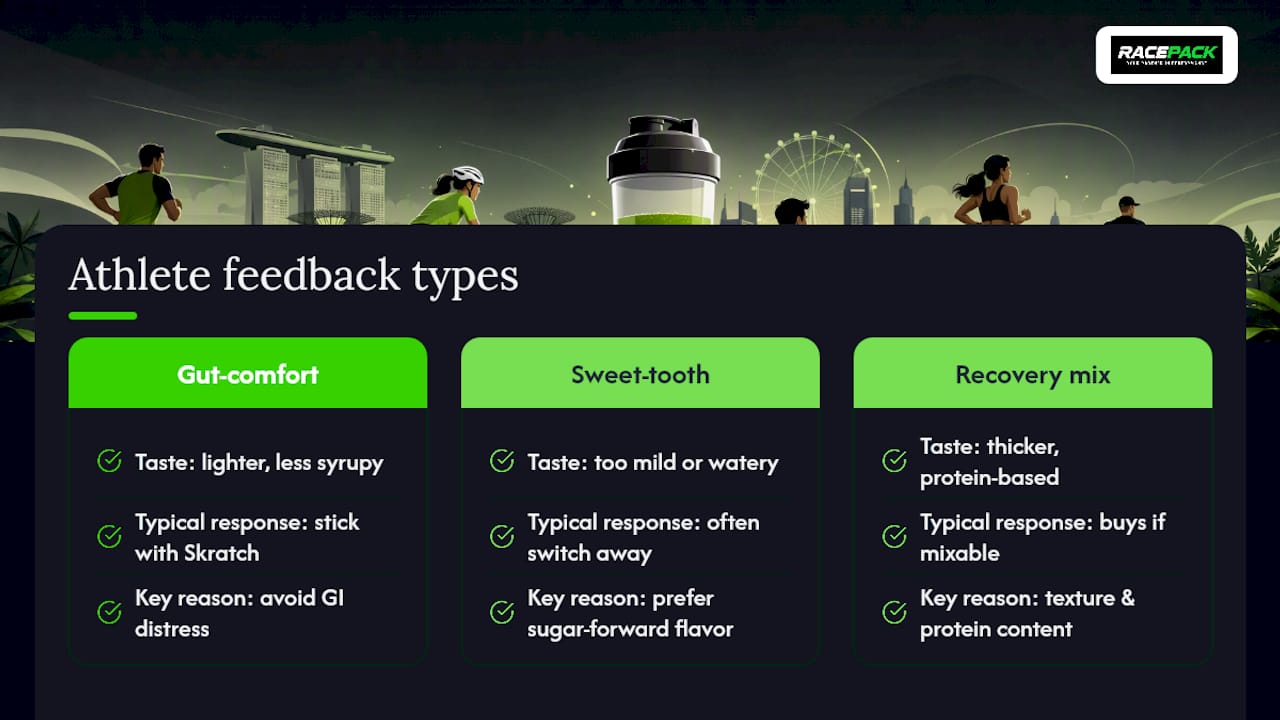
Flavor is where Skratch draws the most consistent praise, and also where opinions split the most. The real-fruit approach means flavors like Lemon Lime and Raspberry Lemonade taste noticeably lighter and less syrupy than many mainstream sports drinks, which is exactly the point: the brand’s cutting of artificial sweeteners is positioned to reduce gastrointestinal distress over long durations, a real concern for anyone drinking a sweet mix for three or four hours straight.
Where feedback varies is intensity. Some athletes coming from heavily sweetened commercial sports drinks describe Skratch as “too mild” or “watery” on first try, because it isn’t chasing the same sugar-forward flavor profile. Others, particularly those who’ve dealt with gut issues from syrupy drinks during marathons or long rides, describe the lighter taste as the reason they stuck with it once they made the switch.
Recovery mix feedback tends to focus on texture and mixability rather than raw taste, since it’s a thicker, protein-based drink by nature. Expert buying guides that test recovery products point out that taste and protein content are the two variables that make or break repeat purchases for this category, and Skratch’s Recovery mix generally scores well on mixability compared to chalkier competitors, though it’s not going to taste like a milkshake.
The consistent thread across feedback: athletes who prioritize gut comfort over maximum sweetness tend to become long-term users, while those chasing an intensely sweet, syrupy flavor sometimes look elsewhere.
What Evidence Backs Skratch’s Hydration Claims?
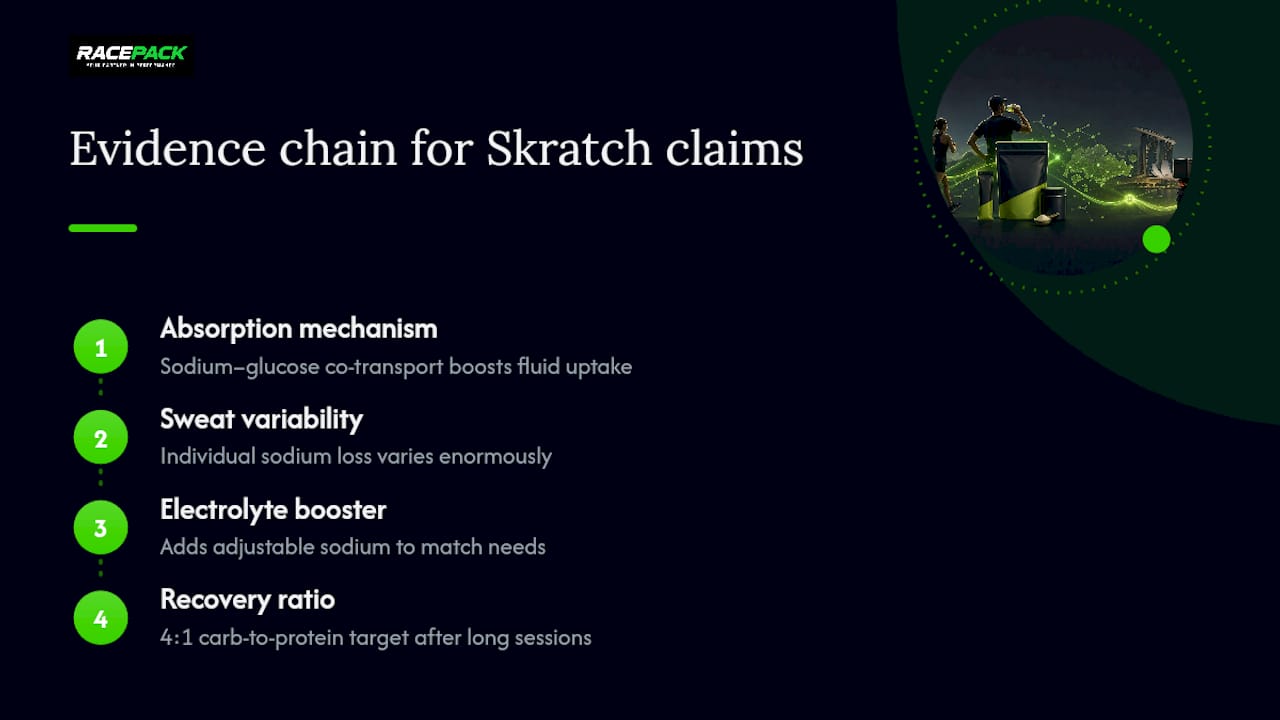
Skratch’s central claim, that its electrolyte ratio matches what an average athlete loses through sweat, rests on sports science that’s well established even if Skratch’s specific formula isn’t independently clinically trialed the way a pharmaceutical product would be. The underlying mechanism, sodium-glucose co-transport speeding intestinal fluid absorption, is foundational physiology, not a proprietary claim unique to one brand.
Where things get more nuanced is sodium exact-matching. Independent practitioner analysis has pointed out that “average” sweat sodium loss varies enormously between individuals, meaning a formula built around an average will under-supply heavier sweaters and over-supply lighter ones. That’s precisely why the Electrolyte Booster exists as a separate add-in rather than baked into a stronger base mix, letting individual athletes titrate sodium instead of guessing.
On the recovery side, the science is more straightforward. A 4:1 carbohydrate-to-protein ratio is a widely cited target for post-exercise refueling in general sports nutrition guidance, particularly for sessions longer than 60 to 90 minutes, and Skratch’s Recovery mix is built directly around that ratio rather than an invented number. For shorter or lower-intensity sessions, plenty of guidance still points toward whole-food recovery meals over any drink mix, powder-based or otherwise, when a real meal is practical.
My Take on Choosing the Right Skratch Mix
For most runners and cyclists training for anything beyond an hour, I’d point you toward the Sport Hydration Drink Mix as the default starting bottle, with the Electrolyte Booster in your kit for hot race days. That combination covers the two variables, sodium loss and fluid uptake speed, that actually determine how you feel in mile 18 or hour three.
Don’t skip the testing phase. Mix your exact race-day ratio in training at least twice before race morning, at race pace, in similar heat. That’s the only way to know if your gut tolerates it and your sodium needs are actually met.
— Jason John
Get Your Skratch Fix Delivered Next Day With Racepack SG
Authentic Skratch stock is available with next-day delivery across Singapore, so you’re never scrambling to find a trustworthy source days before a race. Every packet and bag ships as genuine retailer inventory, not an unverified marketplace listing with no batch traceability.

If you’ve settled on the Unsweetened route for shorter sessions or low-carb training blocks, the Skratch Unsweetened Hydration Sport Drink Mix is stocked in 10 and 20-packet sizes. Training for something longer where fueling matters as much as hydration? Pair your hydration plan with a GU Energy Gel Chocolate Outrage for a caffeine boost mid-race, or a non-caffeinated Campfire S’mores GU gel for earlier miles. After the finish line, rebuild with SiS REGO Rapid Recovery Protein Powder or track your GPS splits with a Garmin Forerunner 165. Browse the full hydration collection and Buy Now to have your next race-day kit at your door tomorrow.
Sources
- Recovery Sport Drink Mix - Skratch Labs
- Best post-workout drinks - Verywell Fit
- The complete guide to sports drinks & recovery - Cycling Weekly
FAQ
Is Skratch Labs Hydration Actually Good for Endurance Athletes?
Yes, for most athletes training or racing beyond an hour. Its electrolyte profile is built to match average sweat losses, and its light carbohydrate content supports fluid absorption without the heavy sugar load of many traditional sports drinks.
When Should I Drink Skratch Labs Sport Hydration Mix?
Start sipping early during exercise lasting longer than an hour, aiming for one to two servings per hour depending on heat and your sweat rate.
Why Does Skratch Have So Much Sugar?
The roughly 19 to 20 grams of carbohydrate per serving isn’t excess sugar. It’s a functional dose that pairs with sodium to speed fluid absorption through sodium-glucose co-transport in the gut.
How Much Sugar Is in a Skratch Serving?
The Sport Hydration Drink Mix contains around 19 to 20 grams of simple carbohydrate per serving, while the Unsweetened version contains effectively none.
What’s the Difference Between Skratch Sport and Unsweetened Mix?
Both share the same electrolyte profile of sodium, potassium, calcium, and magnesium. The Sport mix adds roughly 19 to 20 grams of carbohydrate per serving, while Unsweetened removes the added sugar entirely.
Can I Use Skratch for Sessions Shorter Than an Hour?
You can, but the Unsweetened mix is usually the better fit for shorter or lower-intensity sessions, since you likely don’t need the extra carbohydrate calories.
Is Skratch Labs Vegan or Gluten-Free?
Skratch Labs markets its hydration mixes as vegan, non-GMO, and gluten-free, though anyone with a severe allergy should always confirm current labeling directly on the packet before use.
How Do I Mix Skratch Correctly?
Use one scoop per 350 to 500 milliliters of water as a starting ratio, then adjust concentration based on your taste preference and how your gut handles it during training.
Does Racepack SG Sell Genuine Skratch Labs Products?
Yes. Racepack SG stocks authentic Skratch stock as part of its hydration range, with next-day delivery across Singapore and no grey-market sourcing risk.
Should I Add the Electrolyte Booster to Every Bottle?
No, only in hot, humid conditions or if you already know you’re a heavy salt-sweater. Adding it to every bottle without a real sodium need can oversupply sodium relative to your actual sweat loss.
What’s the Best Skratch Product for Post-Race Recovery?
The Recovery Sport Drink Mix, built around a 4:1 carbohydrate-to-protein ratio, is designed specifically for the post-workout window rather than mid-race sipping.
Where Can I Buy Skratch Labs Products for Delivery in Singapore?
Racepack SG carries the Skratch lineup with guaranteed authenticity and next-day shipping across Singapore. Buy Now to have your order ready before your next long session.